Increased Safety (Ex e)
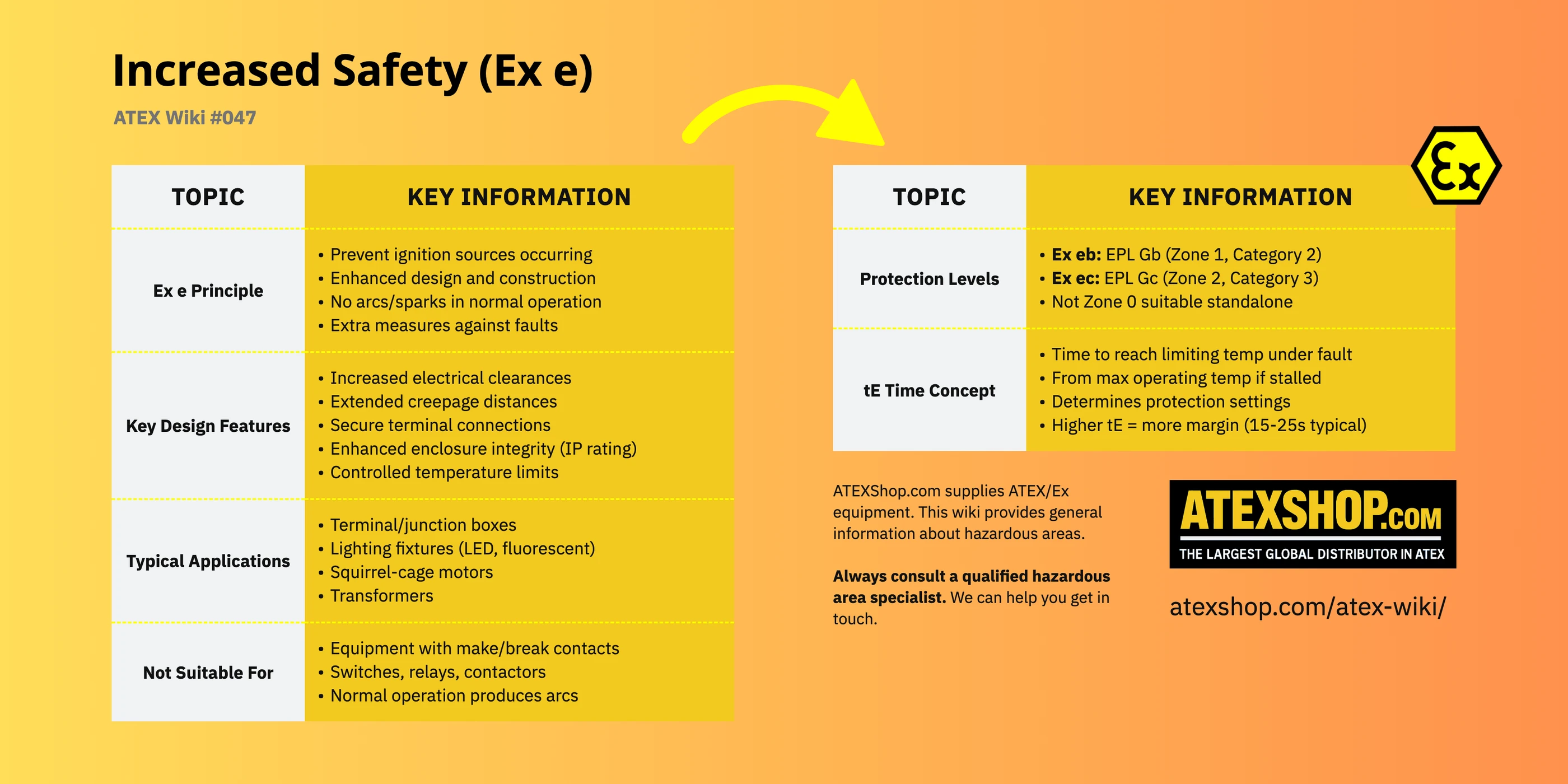
Increased safety, designated "Ex e", takes a fundamentally different approach from other protection methods. Rather than containing explosions or limiting energy, it prevents ignition sources from occurring in the first place through enhanced design and construction. Defined in IEC 60079-7, Ex e is widely used for junction boxes, terminal enclosures, lighting fixtures, and certain motors.
The Increased Safety Principle
Standard electrical equipment can generate ignition-capable sparks or hot surfaces through arcing contacts, electrical faults, or thermal overload. Increased safety equipment is designed and constructed to prevent these conditions from arising under normal operation or specified abnormal conditions. The principle is exclusion of ignition sources rather than containment of their effects.
Ex e equipment must not produce sparks, arcs, or dangerous temperatures during normal operation. Additionally, enhanced measures protect against faults that might otherwise create these hazards.
Key Design Requirements
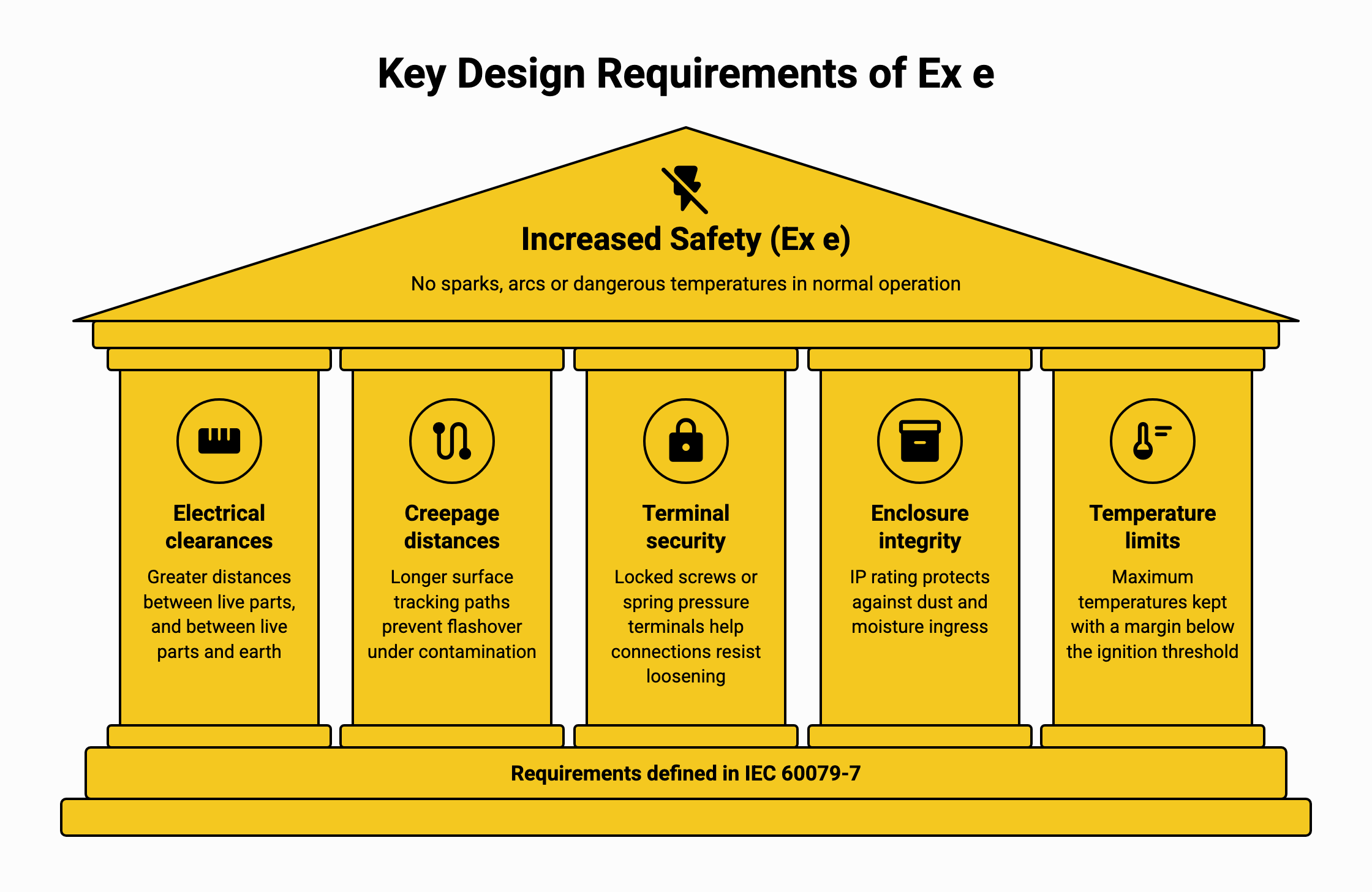
IEC 60079-7 specifies requirements across multiple areas:
- Electrical clearances: Minimum distances between live parts and between live parts and earth are increased beyond normal industrial standards
- Creepage distances: Surface tracking distances are extended to prevent flashover under contamination
- Terminal security: Connections must resist loosening; spring pressure terminals, locked screws, or other positive retention methods are required
- Enclosure integrity: IP ratings ensure protection against dust and moisture ingress
- Temperature limits: Maximum temperatures are controlled with margins below the ignition threshold
The tE Time Concept
A critical parameter for Ex e motors and transformers is the "tE time": the time it takes for the winding to reach its limiting temperature starting from maximum operating temperature when stalled or under locked-rotor conditions. The tE time determines the required protection settings: motor protection must disconnect before tE expires if a fault occurs.
Higher tE times provide more protection margin and simplify protection coordination. Modern Ex e motors often achieve tE times of 15-25 seconds or more.
Typical Applications
Increased safety suits equipment where arcing or high-energy sparking doesn't occur during normal operation:
- Terminal and junction boxes: Ex e is the predominant choice for cable connection enclosures
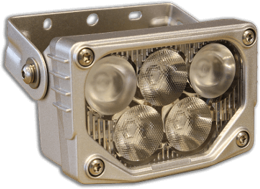
- Lighting fixtures: Particularly fluorescent and LED luminaires (though ballasts may require additional protection)
- Squirrel-cage motors: When combined with proper thermal protection
- Transformers: For power supply and instrumentation applications
Equipment with make-and-break contacts (switches, relays, contactors) cannot use Ex e alone because normal operation produces arcs.
Equipment Protection Level
Standard Ex e equipment achieves EPL Gb, making it suitable for Zone 1 and Zone 2 applications (ATEX Category 2). Recent standards also define "Ex eb" (EPL Gb) and "Ex ec" (EPL Gc, Category 3, Zone 2 only) levels with differentiated requirements.
Combination with Other Methods
Ex e frequently appears in combination with other protection types. A flameproof motor might have an Ex e terminal box. Intrinsically safe circuits often terminate in Ex e junction boxes. Lighting systems may combine Ex e enclosures with special lamp protection. These combinations exploit the strengths of each method where appropriate.
Installation Considerations
Proper installation is crucial for Ex e equipment. Cable entries must maintain the required IP rating. Terminals must be correctly torqued. Unused cable entries must be properly sealed. Motors require correct thermal protection settings based on the certified tE time. Regular inspection verifies terminal tightness and enclosure integrity.