Pressurization (Ex p)
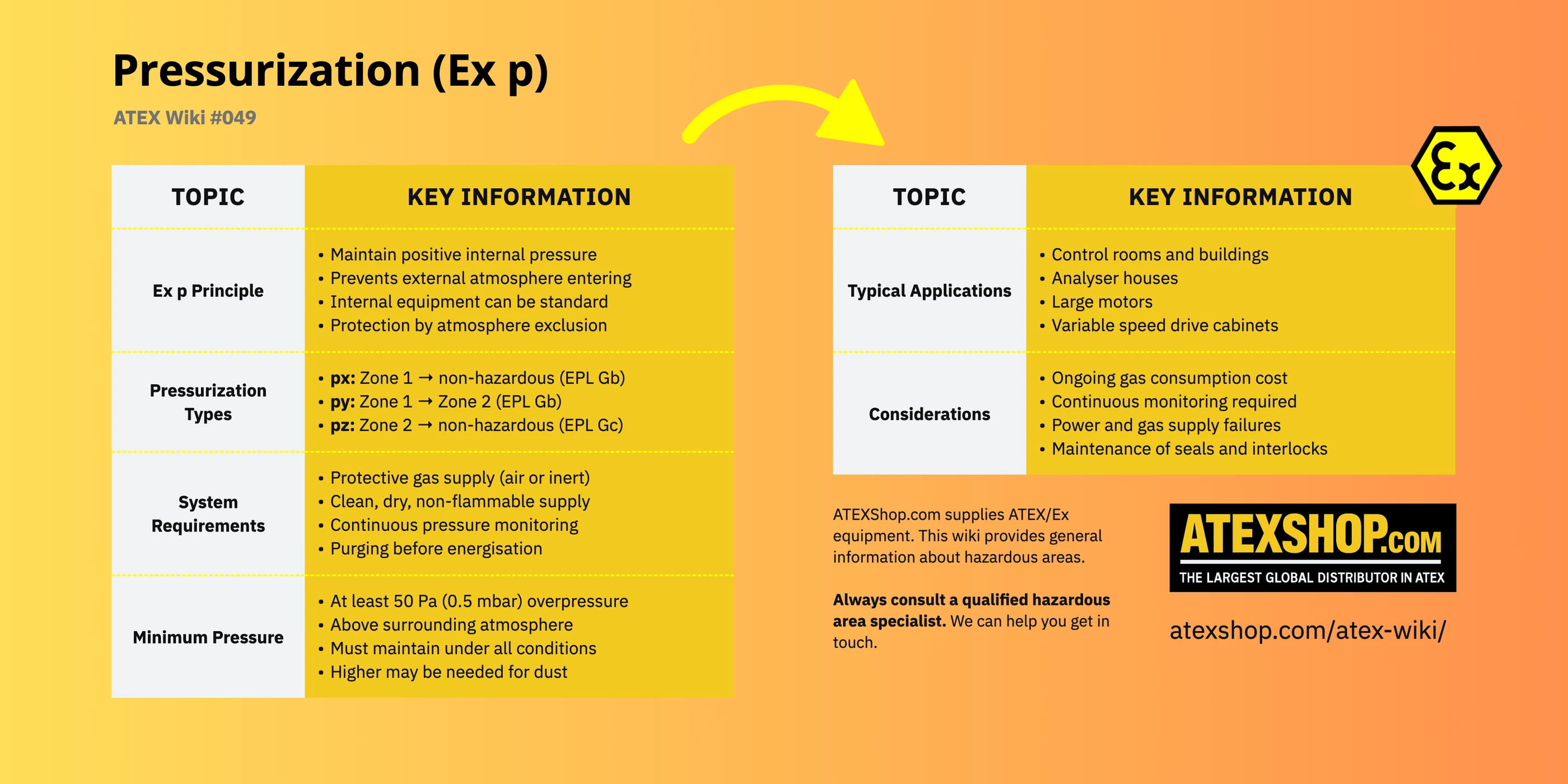
Pressurization, designated "Ex p", protects electrical equipment by maintaining a protective gas (usually air or inert gas) inside the enclosure at a pressure higher than the surrounding atmosphere. This prevents the external explosive atmosphere from entering. Defined in IEC 60079-2, pressurization is commonly used for control rooms, analyser houses, and large electrical equipment like motors and switchgear.
The Pressurization Principle
By maintaining positive internal pressure, any leakage flows outward rather than inward. The external explosive atmosphere cannot enter the enclosure, so internal sparks or hot surfaces don't contact flammable gases or dusts. The equipment inside can be of standard industrial design; the protection comes from atmosphere exclusion rather than equipment modification.
Types of Pressurization
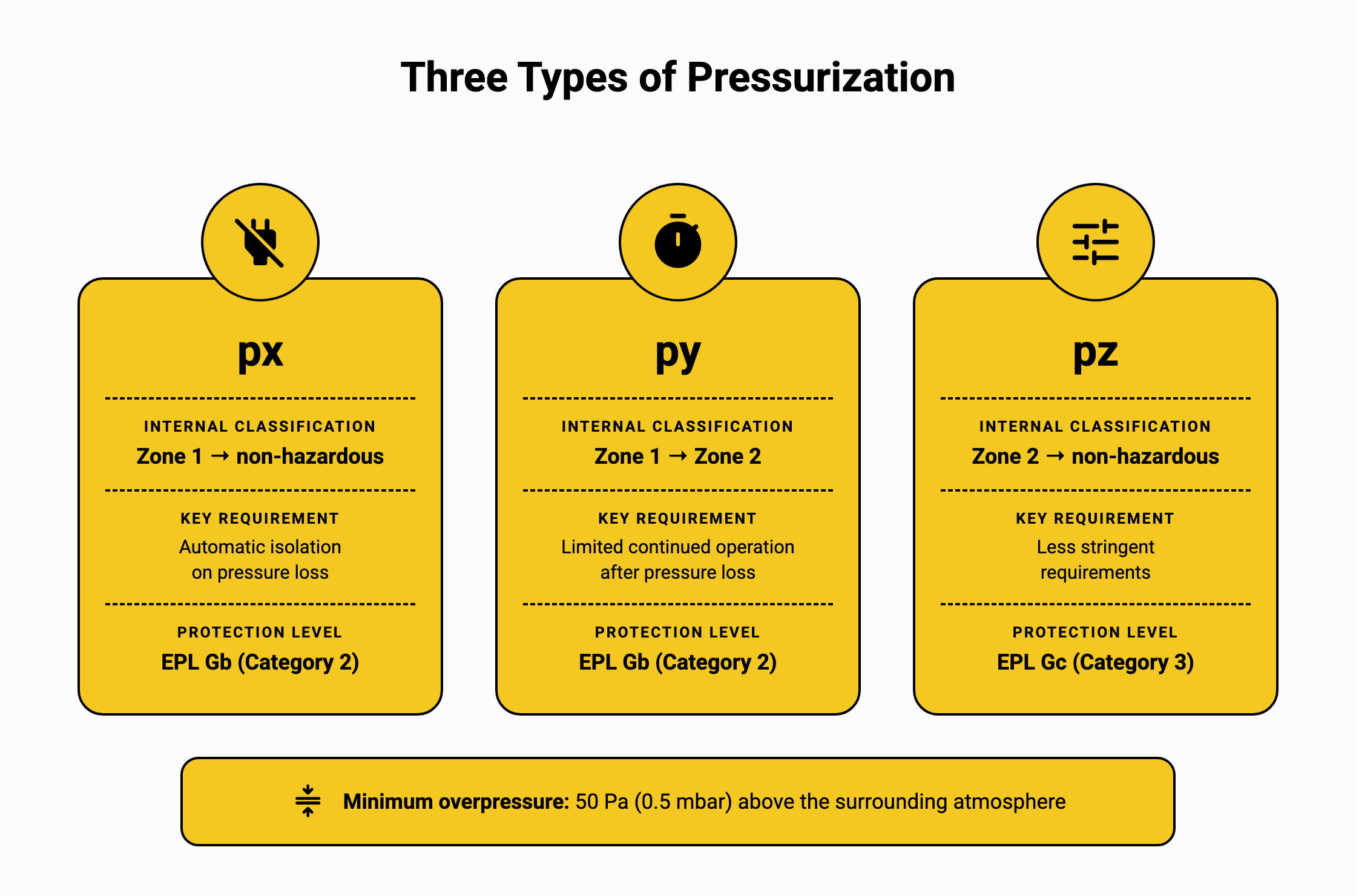
IEC 60079-2 defines three techniques:
- px: Reduces internal classification from Zone 1 to non-hazardous. Highest protection level, requires automatic isolation on pressure loss. Achieves EPL Gb (Category 2)
- py: Reduces internal classification from Zone 1 to Zone 2. Permits continued operation for limited time after pressure loss. Also EPL Gb (Category 2)
- pz: Reduces internal classification from Zone 2 to non-hazardous. Less stringent requirements. Achieves EPL Gc (Category 3)
System Requirements
A pressurization system comprises several essential elements:
Protective gas supply: Typically instrument air, plant air, or inert gas. Must be clean, dry, and free from flammable contamination. The supply must be reliable: loss of protective gas supply eventually leads to pressure decay.
Pressure monitoring: Continuous monitoring detects pressure loss. For px, automatic disconnection must occur when pressure falls below the minimum. For py, alarms alert operators but limited continued operation is permitted.
Purging: Before energisation, the enclosure must be purged to remove any explosive atmosphere that may have entered during shutdown. Typically requires at least five volume changes with protective gas.
Minimum Overpressure
The enclosure must maintain at least 50 Pa (0.5 mbar) positive pressure above the surrounding atmosphere. Higher pressures may be specified for dusty environments or where greater margin is desired. Pressure must be maintained under all operating conditions including temperature variations and minor leakage.
Enclosure Requirements
The enclosure must be robust enough to maintain pressure and withstand purge flow rates. All joints, entries, and penetrations must be effectively sealed. Doors and access panels require interlocks preventing opening while energised (for px/py types) or at minimum must trigger alarms. Breathing devices and relief valves manage pressure during temperature changes.
Typical Applications
- Control rooms and buildings: Entire rooms can be pressurized, allowing standard computers, displays, and control equipment to operate in Zone 1 surroundings
- Analyser houses: Process analysers often contain ignition sources; pressurized enclosures allow their use adjacent to process areas
- Large motors: Where flameproof construction becomes impractical or expensive at large sizes
- Variable speed drives: Power electronics can be housed in pressurized cabinets
Where only a single operator station or handheld device is needed in the zone, explosion proof computers and tablets certified for that zone are an alternative to a pressurized room.
Advantages and Considerations
Pressurization allows use of standard equipment with relatively simple modifications. For large equipment or complete rooms, it's often more economical than certifying individual items. However, ongoing protective gas consumption adds operational cost, and the system requires continuous monitoring and maintenance. Power supply and gas supply failures must be addressed through appropriate interlocks and alarms.
Dust Atmospheres
Pressurization can also protect against combustible dust atmospheres, preventing dust ingress. Requirements differ somewhat: dust environments may need filtered air supply and careful attention to preventing dust accumulation on enclosure surfaces where surface temperatures might matter.