Type n Protection (Ex n)
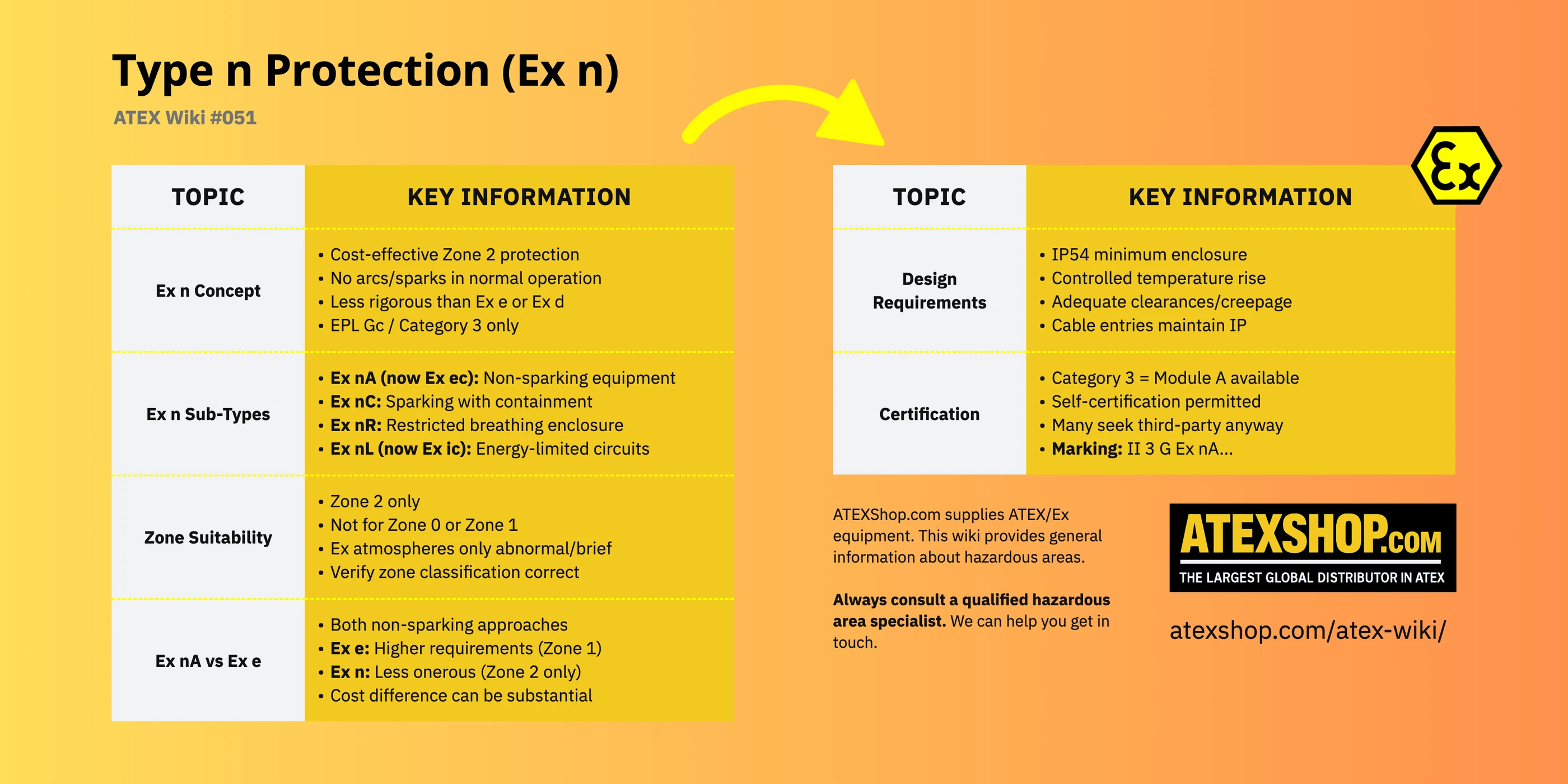
Type n protection, designated "Ex n", provides a cost-effective solution for Zone 2 applications where explosive atmospheres are unlikely under normal conditions. Defined in IEC 60079-15, Ex n covers equipment that doesn't produce arcs, sparks, or hot surfaces capable of causing ignition during normal operation, but without the enhanced safeguards required for Zone 1 equipment.
The Type n Concept
Type n sits between standard industrial equipment and the more rigorous protection types like flameproof (Ex d) or increased safety (Ex e). It recognises that Zone 2 areas experience explosive atmospheres only under abnormal conditions and briefly, so equipment preventing ignition during normal operation provides adequate safety.
The protection philosophy: eliminate or control ignition sources during intended use, but don't necessarily design for all foreseeable faults as higher-category equipment must.
Subdivisions of Ex n
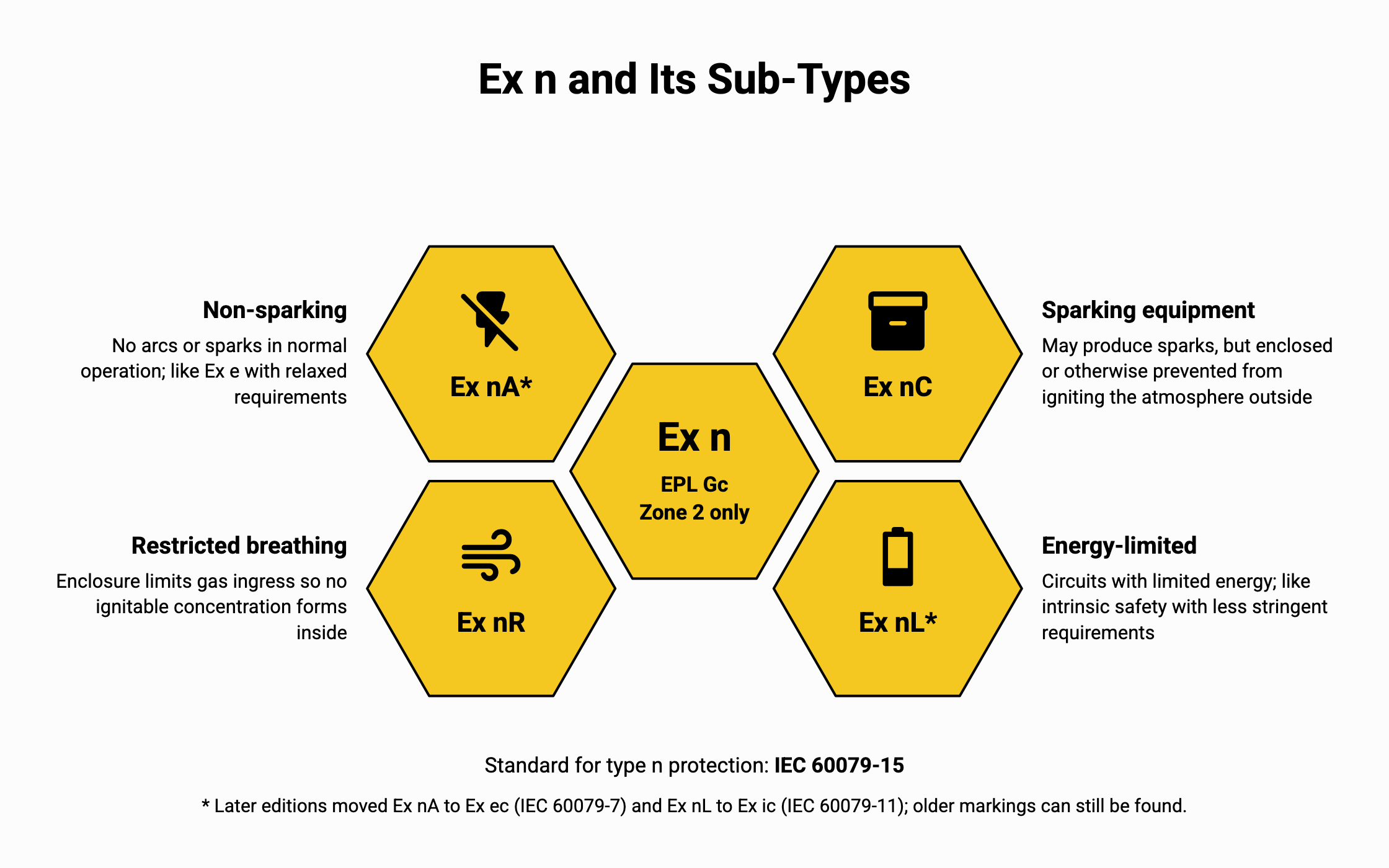
IEC 60079-15 defines several sub-types addressing different equipment and ignition source scenarios:
- Ex nA (non-sparking): Equipment that doesn't produce arcs or sparks in normal operation, similar to Ex e but with relaxed requirements
- Ex nC (sparking equipment): Devices that may produce sparks, but enclosed in housings or using other means to prevent ignition
- Ex nR (restricted breathing): Enclosures limiting gas ingress sufficiently to prevent internal ignitable concentrations
- Ex nL (energy-limited): Circuits with limited energy, similar to intrinsic safety but with less stringent requirements
Later editions of IEC 60079-15 moved Ex nA to Ex ec (IEC 60079-7) and Ex nL to Ex ic (IEC 60079-11), so the 2017 edition covers Ex nC and Ex nR. The older nA and nL markings can still be found on installed equipment.
Protection Level and Zone Suitability
Ex n equipment achieves EPL Gc, making it Category 3 equipment suitable only for Zone 2 applications. It must never be installed in Zone 0 or Zone 1 where explosive atmospheres may occur during normal operation or foreseeable disturbances.
Typical Applications
Ex n finds wide use in Zone 2 environments across many industries:
- General purpose motors: Standard squirrel-cage motors with appropriate design features
- Lighting fixtures: Where Zone 1 rating isn't required
- Junction boxes: For cable termination in less hazardous areas
- Control panels: Housing standard industrial controls in Zone 2
- Instrumentation: Non-sparking measurement devices
Comparison with Ex e
Both Ex nA and Ex e are "non-sparking" approaches, but requirements differ significantly. Ex e demands increased clearances, creepage distances, and terminal security; Ex n requirements are less onerous. Ex e achieves EPL Gb (Zone 1 suitable); Ex n achieves only EPL Gc (Zone 2). The cost difference can be substantial, making Ex n attractive where Zone 2 classification applies.
Design Requirements
Key Ex nA requirements include: enclosure integrity (typically IP54 minimum), controlled temperature rise ensuring maximum surface temperatures stay below ignition thresholds, adequate electrical clearances and creepage distances, and cable entries maintaining ingress protection.
For Ex nC (sparking devices), the enclosure must contain contacts sufficiently that any arc or spark cannot ignite external atmospheres under normal operation conditions.
Certification and Marking
As Category 3 equipment, Ex n can be self-certified by manufacturers through Module A (internal production control) without Notified Body involvement. However, many manufacturers still seek third-party certification for market credibility. The marking shows: Group II, Category 3, the specific type (e.g., Ex nA), gas group, and temperature class.
Installation Considerations
Zone 2 classification must be properly documented before Ex n equipment is installed. If conditions change and the area becomes Zone 1, Ex n equipment must be replaced or the hazard source eliminated. Regular verification that areas remain correctly classified is important for ongoing compliance.